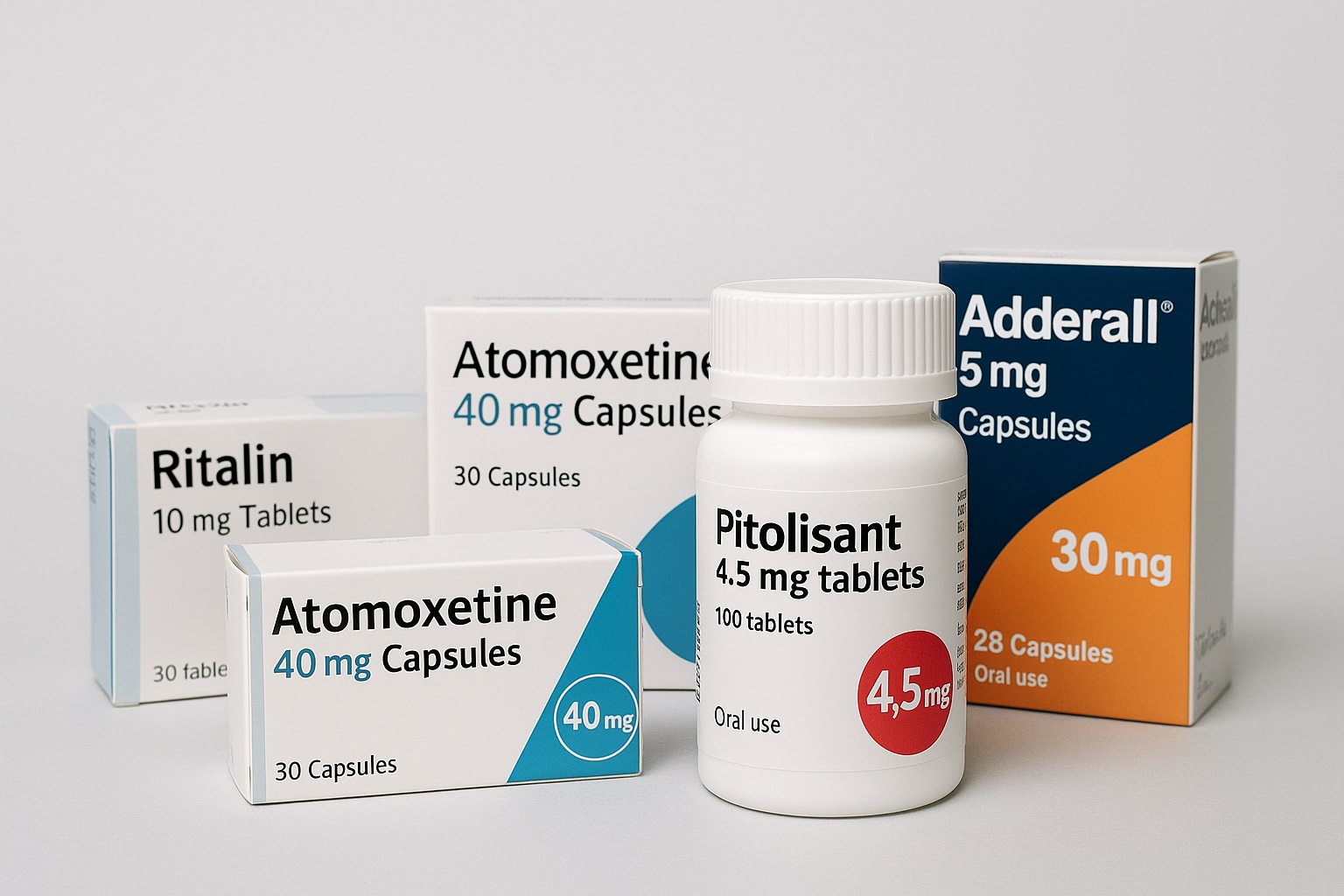
Pitolisant is a wakefulness-promoting medication prescribed for narcolepsy with or without cataplexy. Sold under the brand name Wakix®, it represents a unique therapeutic option because it is not a stimulant, carries low misuse potential, and is treated very differently under UK law compared to drugs used for ADHD or amphetamine-based wake-promoting agents.
How the UK Legally Classifies Pitolisant
Prescription-Only Medicine (POM)
Pitolisant is regulated as a Prescription-Only Medicine (POM) under the Human Medicines Regulations 2012.
This means:
- It requires a prescription from an authorized UK prescriber.
- It cannot be obtained legally without clinical oversight.
- It may only be dispensed through a registered pharmacy.
The MHRA licenses and supervises Pitolisant, evaluating its safety, efficacy, and risk-benefit profile as part of its medicine-authorisation process.
Not Controlled Under the Misuse of Drugs Act
Pitolisant is not controlled under the Misuse of Drugs Act 1971 or the Misuse of Drugs Regulations 2001.
This carries important legal consequences:
- It is not categorized as Class A, B, or C.
- It does not fall under Schedules 1–5.
- No Home Office license is required for prescribing, possession, or dispensing.
- Pharmacies do not need to use controlled-drug safes or CD registers.
This distinguishes Pitolisant from stimulant medications, which are tightly regulated to prevent misuse.
Why Pitolisant Is Not a Controlled Substance
Three regulatory bodies influence this decision:
1. EMA
EMA’s assessment found that Pitolisant carries minimal abuse liability and does not produce euphoria or cravings.
2. WHO ECDD
The WHO Expert Committee on Drug Dependence concluded that Pitolisant does not warrant international control.
3. MHRA
The MHRA recognized that Pitolisant’s mechanism (H3-receptor inverse agonism) is not associated with stimulant-type dependence.
Together, these determinations led the UK to classify Pitolisant as a POM but not a controlled drug.
Comparison With ADHD Medications
This section is included to satisfy Option B’s internal-link rule and provide legal context.
How Pitolisant Differs From Ritalin (Methylphenidate)
- A Class B controlled drug
- Schedule 2 under the Misuse of Drugs Regulations
This requires:
- Controlled-drug prescription formatting
- Safe-custody storage
- Witnessed destruction
- Mandatory CD register documentation
Pitolisant requires none of these due to its low dependency profile.
Comparison With Atomoxetine
Atomoxetine in the UK is also not a controlled drug.
Both Pitolisant and Atomoxetine:
- Are POM-regulated
- Are not scheduled under UK drug-control law
- Avoid the stringent CD rules that stimulants face
However, Atomoxetine’s oversight focuses on psychiatric risks, while Pitolisant is monitored for hepatic and sleep-related effects.
Comparison With Vyvanse (Lisdexamfetamine)
Vyvanse in the UK is a:
- Class B controlled drug
- Schedule 2 stimulant
Pitolisant remains dramatically easier to prescribe legally, as it requires no controlled-drug infrastructure.
Comparison With Adderall
Adderall in the UK is treated as a controlled amphetamine-based medication.
Pitolisant, however:
- Is non-amphetamine
- Lacks recreational use patterns
- Requires only standard POM compliance
Who Can Legally Prescribe Pitolisant in the UK?
The following professionals may prescribe Pitolisant:
- Consultant neurologists
- Sleep-medicine specialists
- Approved GPs (especially for stable maintenance)
- Psychiatrists (in hypersomnia cases)
No Home Office controlled-drug authority is required.
Pharmacy Requirements in the UK
Pharmacies must:
- Dispense only upon a valid prescription
- Label according to POM standards
- Provide counseling when required
Pharmacies do not need:
- Controlled-drug safes
- CD registers
- Special controlled-drug prescription pads
This makes Pitolisant dispensing substantially simpler than stimulant dispensing.
Travel, Importation, and Exportation Rules
Because Pitolisant is not a controlled drug:
✔ Travelling with Pitolisant
Allowed with original packaging and prescription.
✔ Importing for personal use
Permitted when the patient has a legitimate prescription.
✔ Exporting from the UK
No controlled-drug declaration needed.
⚠ However, other countries may classify Pitolisant differently, especially in regions with strict medicine-import rules. Always check ahead.
Safety Monitoring and Pharmacovigilance
The Yellow Card Scheme enables patients and clinicians to report suspected adverse reactions.
Prescribers must monitor:
- Hepatic function
- Psychiatric status
- Excessive insomnia
- Cardiac comorbidities
Failure to follow safety guidance can have regulatory consequences under the MHRA.
Common Legal Pitfalls to Avoid
Even though Pitolisant is not controlled, it remains regulated:
Illegal actions include:
- ❌ Buying Pitolisant without a prescription
- ❌ Importing large quantities beyond personal use
- ❌ Sharing or reselling medication
- ❌ Using non-MHRA-approved online pharmacies
- ❌ Falsifying medical details to obtain supply
Such actions may breach the Human Medicines Regulations 2012.
Why Pitolisant Has a Unique Legal Profile
Pitolisant’s legal classification reflects:
- WHO’s global assessment
- EMA’s pharmacological and abuse-potential findings
- MHRA’s national evaluation
- Low dependency risk
- Non-stimulant mechanism
These findings justify its status as a POM rather than a controlled substance.
Summary: What UK Patients Should Know
- Pitolisant is legal with a prescription in the UK.
- It is not a controlled drug under the MDA 1971.
- It is regulated as a Prescription-Only Medicine (POM).
- No controlled-drug licensing, registers, or safes required.
- It is easier to prescribe legally than stimulant ADHD medications.
- Safety oversight is continuous via MHRA mechanisms.
- Travel and import rules are more lenient than for stimulants.
Pitolisant remains an important and legally accessible therapy for narcolepsy patients needing improved wakefulness without the regulatory burdens of controlled stimulants.
This article is for informational purposes only and does not constitute legal advice. For personal or clinical decisions, consult a licensed UK healthcare provider or solicitor.